skip to main |
skip to sidebar

Sunday, March 21, 2010

rudi
 Plus loneliness are often faced with stressful situations thought to increase the risk of breast cancer. Not only that, loneliness also increase the size of the tumor cells more than 8,000 percent.
Although it was only proven in mice in the laboratory, but various studies had always found a link between loneliness and the immune system. Various studies have shown that loneliness invite disease.
In a study of mice on top of the published in the journal Proceedings of the National Academy of Sciences December 2009 issue, the experts concluded that self-isolation and stress plays an important role in the occurrence of breast cancer in humans.
When alone with someone in a state of depression, hormones in the body such as adrenaline, serotonin, and cortisol will be affected. Besides the production of stress hormones also increased. Hormonal activity is what triggers the disease.
Loneliness actually has a different meaning of solitude. Loneliness it is perceived as a positive and enjoyable experience and a refreshing emotional, because the activities of their own time can be used to enjoy the quiet, self-reflection, and seeking identity. Loneliness, on the other hand, are feeling empty and isolated a very strong, as if cut off, not connected with other people.
Sunday, March 21, 2010
rudi
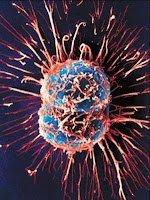 Some British scientists succeeded in uncovering why some breast cancer patients who fail therapy. It turned out that the cause is too much gene called FGFR1 who do not respond to drug therapy Tamoxifen.
Tamoxifen is a drug used to prevent breast cancer recurrence. Unfortunately, one third of patients did not give a positive response to the results of this therapy. In the journal Cancer Research, the scientists managed to write them off FGFR1 gene that tamoxifen could work.
Experts say, when FGFR1 was stopped, hormone-based therapies such as tamoxifen drug could return to work to destroy cancer cells. It is believed to help save the lives of thousands of patients each year.
Dr Nick Turner, head researcher said one of the 10 breast cancer patients have a number of genes that are too high FGFR1. "There are several types of drugs developed to stop the work FGFR1 and clinical studies conducted to determine whether this drug could fight cancer with so many copies of the gene," he said.
Tamoxifen works by inhibiting female sex hormone, estrogen, which fueled the growth of tumors.
Article Source: http://breast-cancersymptoms.com/ Source: Kompas.com
Sunday, March 21, 2010
rudi

Research topic Investigation of Serial Studies to Predict Your Therapeutic Response with Imaging and Molecular Analysis (I-SPY2) was tested DNA analysis approach to determine the best drug for each individual patient.
I-SPY2 also tested DNA analysis approach to identify the type of action and what the treatment is not suitable for each individual patient. Thus, every action and treatment is not suitable for patients can be stopped.
Research that will last for five years to get the budget 26 million U.S. dollars. Third pharmaceutical manufacturers involved in the research, Abbott Laboratories, Amgen, and Pfizer agreed to share information, the effectiveness of DNA analysis approach in estimating the impact of their production of drugs to the U.S. Biomarkers Consortium. Research information will also be distributed to the National Agency for Drug and Food United States (FDA) and the U.S. National Institutes of Health (National Institutes of Health).
"I think this kind of research could be a model in future research," said Deputy Director of the U.S. National Cancer Institute Anna Barker when contacted Reuters.
"Research I-SPY 2 will be the first step to create individualized treatment for each cancer patient," says breast cancer surgeon University of California San Francisco, Dr. Laura Esserman. Esserman also will be testing clinic leader of the study.
Drugs used in cancer research is ABT-888 or the production veliparib Abbott Laboratories. The drug that works by blocking cellular repair enzymes needed by cancer cells.
The second drug is AMG 655 (conatumumab) production Amgen, which is a kind of barrier APO / TRAIL causes cancer cells to destroy themselves.
The third drug being tested is AMG 386, also developed by Amgen. The drug works by stopping the ability of tumor blood flow in the tumor cells.
Two final drug is Pfizer's production, CP-751, 871 (figitumumab) and HKI-272 (neratinib). CP-751, 871 that attacks the nerve endings of insulin growth factor (IGFR), whereas HKI-272 works by destroying a number of the recipient nerve stimulation on cancer cells. (row)
 Sunday, March 21, 2010
 rudi
rudi
 Plus loneliness are often faced with stressful situations thought to increase the risk of breast cancer. Not only that, loneliness also increase the size of the tumor cells more than 8,000 percent.
 Posted in